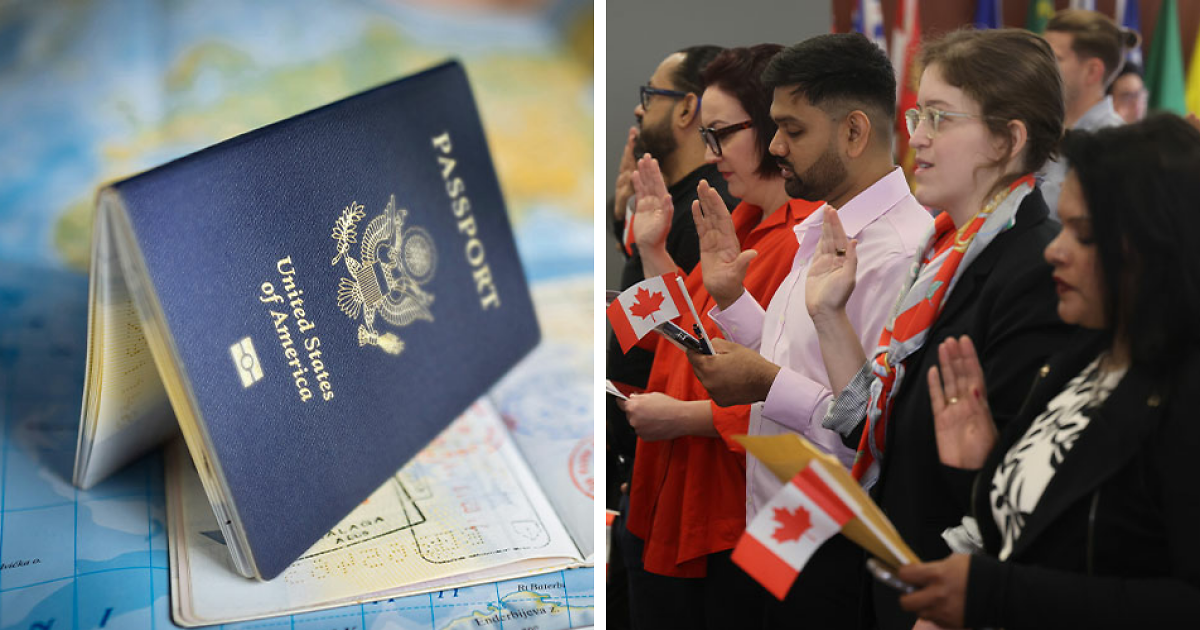
Thousands of Americans applied Canadian Citizenship under the legal term “Missing Canadians” following sweeping legislation passed in December.
“Missing Canadians” refers to people who “lost or never acquired citizenship due to certain outdated provisions in previous citizenship laws,” according to the Canadian government.
Under previous law, Canadian citizenship could only be passed from parents to children.
- The “Missing Canadian Citizens” Act has encouraged thousands of Americans to apply for Canadian citizenship.
- The law has relaxed the criteria for Canadian citizenship, which previously only passed from parent to child.
- Americans cited professional opportunities, political reasons, and “insurance” as motivations for applying for Canadian citizenship.
Canadian law has opened the door to citizenship for “Missing Canadians”
Image credit: Unsplash (Not the actual photo)
However, Bill C-3, signed into law on December 15, expands access to citizenship to anyone with Canadian ancestors, including grandparents, great-grandparents or even distant ancestors.
Of course, those seeking dual citizenship must provide proof of lineage, including birth, death, or marriage certificates of ancestors. The cost of requesting proof of citizenship is reported to be $75 CAD (approximately $55 USD).
QThose born on or after December 15, 2025 must demonstrate that their Canadian ancestor has lived in Canada for 1,095 days.
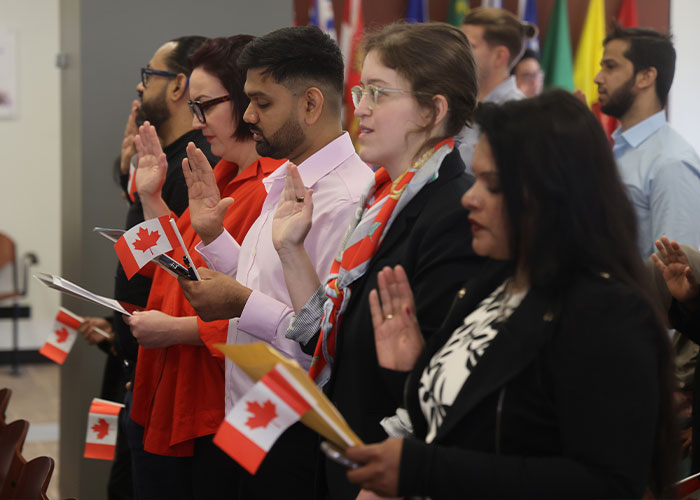
Image credit: Getty/NurPhoto
The chain of Canadian citizenship must never be broken. If any ancestor lost his or her citizenship—for example, due to marriage to a non-Canadian as defined under previous law—the entire claim could be disqualified.
Terry Preshaw, an immigration attorney in Washington, said KING News 5 that his phone has been ringing non-stop since the new law went into effect. Preshaw said he had four clients seeking Canadian citizenship last year to more than 50 clients in 2026.
Nicholas Berning, an immigration lawyer at Boundary Bay Law, said his practice is “pretty much” inundated with clients seeking help submitting proof of citizenship applications.
The surge in applications follows Bill C-3, which allows people with distant Canadian ancestry to gain citizenship
Image credit: Unsplash (Not the actual photo)
While many see the term “Lost Canada” as an opportunity to reconnect with their roots, others see it as a source of employment opportunities or a backup plan if they run into trouble with law enforcement.
“When I first heard about the bill, I couldn’t believe it,” said Maureen Sullivan, who lives in Florida. Associated Press. “It felt like a little gift fell into my lap.”
Sullivan explained that he became interested in obtaining Canadian citizenship after his nephew, who lives in Minnesota, encountered federal officers near his high school during the state’s recent immigration crackdown.
“We want to feel like we’re doing something to keep us safe in the future, if necessary,” he said.
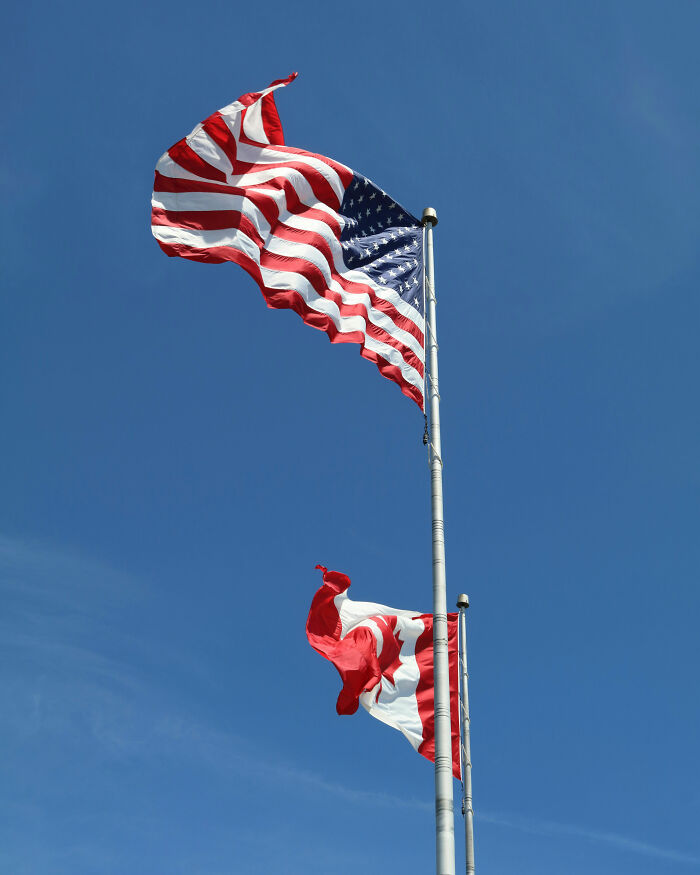
Image credit: Unsplash (Not the actual photo)
Meanwhile, Nick Wallick, a graduate of a film school in Seattle, said Canadian citizenship could give someone like him, who has French-Canadian heritage, easier access to Vancouver’s booming film industry without needing a work visa.
“I don’t know much about my history on either side,” Wallick said. “So this helps me learn more about who I am. And maybe it will do me good too.”
Zack Loud, who lives in Minnesota and whose grandmother is Canadian, said he and his wife had discussed the possibility of moving outside the U.S. for work, and the new law “pushed Canada to the top of our list.”
The law offered job opportunities and a “backup plan” to thousands of people in the United States

Image credit: Unsplash (Not the actual photo)
Others, like Michelle Cunha of Massachusetts, explained that their motivation for applying for dual citizenship was purely political.
“I did my best for 30 years. I have done everything I could to make the United States what the world promised, a place of freedom, a place of equality,” said the political activist.
“But clearly we’re not there and we won’t get there any time soon.”
Cunha said he hired a lawyer to help prove citizenship, a service that reportedly cost about $6,500.

Image credit: Unsplash (Not the actual photo)
According to Preshaw, many of his clients view legal documents as “insurance,” explaining, “Why do we buy insurance? Not because we want to use it — but just in case disaster strikes.”
The website of the Canadian Immigration, Refugees and Citizenship office, which processes applications, states that the processing time for certificates is about 10 months.
More than 50,000 people are waiting for answers.
Not everyone in Canada is enthusiastic, and some locals question the “comfortable Canadians”
Image credit: Unsplash (Not the actual photo)
Despite what legal documents state, many Canadians may not welcome their southern neighbors who are “comfortable Canadians” with open arms, suggests Fen Hampson, Professor of International Relations at Carleton University in Ottawa.
“I think the people who start to get suspicious are someone who has never been to Canada, who has very thin ties. People don’t like that,” Hampson told The New York Times. AP.

Image credit: Unsplash (Not the actual photo)
The Conservative Party, with support from the Bloc Québécois, has sought amendments to the bill that would impose stricter rules for citizenship, including language requirements and security checks for adults, BBC reported.
However, this amendment failed to be approved by the DPR.
Thank You! See the results:
Number of votes ·
Bulletin
Subscribe to Access
Exclusive Poll

By entering your email and clicking Subscribe, you agree to allow us to send you personalized marketing messages about us and our advertising partners. You also agree to our Privacy Policy.
Thank You! You have successfully subscribed to the newsletter!
PakarPBN
A Private Blog Network (PBN) is a collection of websites that are controlled by a single individual or organization and used primarily to build backlinks to a “money site” in order to influence its ranking in search engines such as Google. The core idea behind a PBN is based on the importance of backlinks in Google’s ranking algorithm. Since Google views backlinks as signals of authority and trust, some website owners attempt to artificially create these signals through a controlled network of sites.
In a typical PBN setup, the owner acquires expired or aged domains that already have existing authority, backlinks, and history. These domains are rebuilt with new content and hosted separately, often using different IP addresses, hosting providers, themes, and ownership details to make them appear unrelated. Within the content published on these sites, links are strategically placed that point to the main website the owner wants to rank higher. By doing this, the owner attempts to pass link equity (also known as “link juice”) from the PBN sites to the target website.
The purpose of a PBN is to give the impression that the target website is naturally earning links from multiple independent sources. If done effectively, this can temporarily improve keyword rankings, increase organic visibility, and drive more traffic from search results.
About The Author