We traveled by Shinkansen, Japan’s bullet train, from Tokyo to Osaka as part of our trip to Japan.
Yes friends, it’s time for another Japan travel recap, and this is the first part of our time in Osaka, starting with Dotonbori during the day and night.
I was so excited to get on the bullet train because, you know… It’s a bullet train. I’m usually not a fan of anything fast, so I googled it once we were on the plane and felt better when I read that it had an excellent safety record. I like a little reassurance before doing anything fast.
Actually I’m not sure what that means, because I’m not getting off the train. I might start praying really hard.
Without the bullet train, the trip from Tokyo to Osaka can take around 6 to 10 hours, depending on how you travel. On the bullet train, it’s only about 2.5 to 3 hours, quite a big difference!

As soon as the bullet train left the station, picking up speed, and my ears bulged a little, it was a strange sensation that was hard to explain. You’re used to how fast things move, and it doesn’t feel fast at all. I felt very lucky to be able to experience it, as I had heard a lot about this amazing train.
We booked seats on the side of Mount Fuji, so we had a great spectacular view Mount Fuji as we zoomed past. I took about a thousand photos and videos. It’s so beautiful.

Arrive in Osaka
After arriving at Osakawe went there Nishinari Wardwhere we live. It’s such a contrast to Tokyo, and feels much quieter because it’s residential. That’s one of the advantages of staying at an Airbnb: you get to experience a more local side of the city.


At first, I thought it would be very quiet because it was Sunday, but it remained quiet the entire time we were there.


One of the highlights (there are so many!) is exploration Dotonboria bustling district full of food, neon lights and canals. It’s about a 10 to 15 minute train ride from where we were staying Nishinari Ward. It feels like a different side of Osaka, with so much energy and bustle.
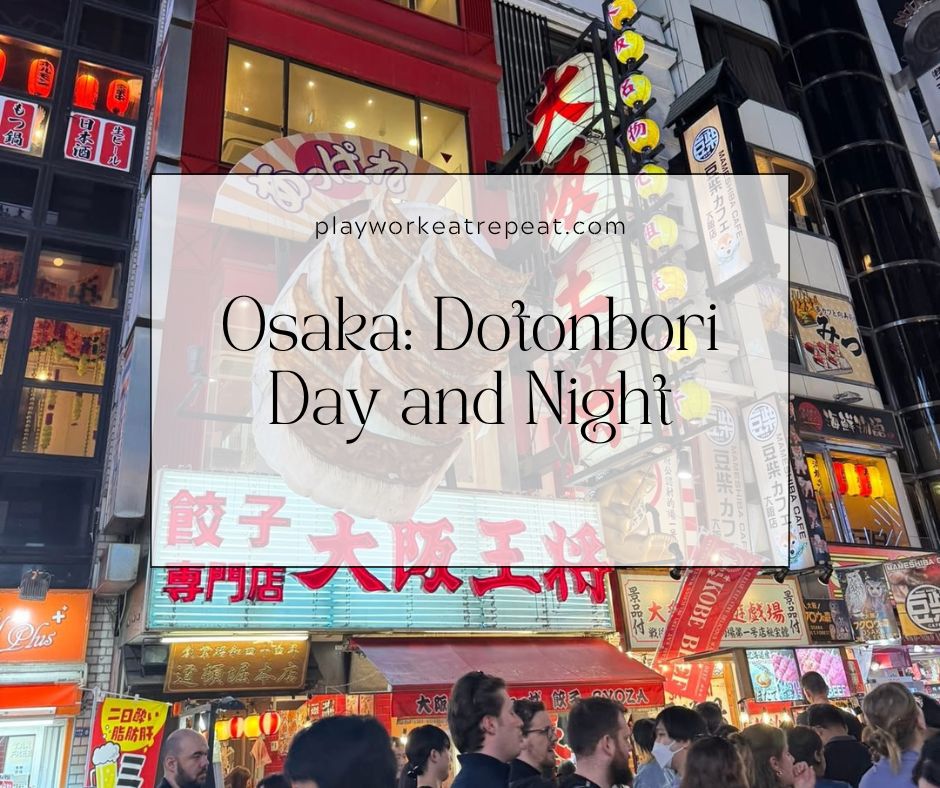
Osaka: Dotonbori Day and Night
Dotonbori in the Daytime
We went during the day first, and it was busy, but not like that Akihabara in Tokyo. That’s next-level sensory overload!
In the Dotonboriwe saw rivers, bridges and the famous Glico running man.

Dotonbori is full of signs and huge, incredible food displays everywhere. I took so many photos of the giant crabs, the octopus sign, and the huge food displays attached to the building. I didn’t know where to look because there was so much going on everywhere. It’s amazing and something I’ve never seen before. It almost feels like a food themed amusement park, that’s the best way I can describe it.


Dotonbori at Night
The next time we visited Dotonbori was at night. All the signs were on, and the streets were even busier than during the day.


We saw delicious food being prepared everywhere, and it smelled amazing.

People were lining up to enjoy takoyaki (small savory balls filled with octopus, Osaka’s famous street food), and there was so much going on around us.
We tried various takoyaki options, and the good news is that the quality of the takoyaki is just as good as Instagram says!

We also took a walk in the nearby shopping street.

Including Shinsaibashi-suji Shopping Street.

It felt like a long covered street that just kept going, with shops everywhere and people constantly moving. It’s a shopper’s dream, with every kind of brand you can think of.
Dotonbori full of energy at night.

The good thing is that even with so many people, it doesn’t feel overwhelming at all. At Osaka Dotonbori, both day and night, it is incredibly busy. Very busy! But even so, you can still walk freely, stop whenever you want, and just enjoy the moment. It really is one of those “wow” places that you have to experience.

PakarPBN
A Private Blog Network (PBN) is a collection of websites that are controlled by a single individual or organization and used primarily to build backlinks to a “money site” in order to influence its ranking in search engines such as Google. The core idea behind a PBN is based on the importance of backlinks in Google’s ranking algorithm. Since Google views backlinks as signals of authority and trust, some website owners attempt to artificially create these signals through a controlled network of sites.
In a typical PBN setup, the owner acquires expired or aged domains that already have existing authority, backlinks, and history. These domains are rebuilt with new content and hosted separately, often using different IP addresses, hosting providers, themes, and ownership details to make them appear unrelated. Within the content published on these sites, links are strategically placed that point to the main website the owner wants to rank higher. By doing this, the owner attempts to pass link equity (also known as “link juice”) from the PBN sites to the target website.
The purpose of a PBN is to give the impression that the target website is naturally earning links from multiple independent sources. If done effectively, this can temporarily improve keyword rankings, increase organic visibility, and drive more traffic from search results.