
South Carolina’s highest court decided that a controversial arousal test too unreliable to be used as evidence to keep predators behind bars.
That unanimous decision by South Carolina Supreme Courtreleased last month, centered on the name of the as*x perpetrator Andy Hyman.
After pleading guilty to second-degree criminal sexual conduct involving minors in 1997, Hyman served a short prison sentence and completed several years of supervised release in 2003.
- The South Carolina Supreme Court ruled against using a scientifically dubious test as evidence that a predator is likely to commit another crime.
- The test, known as PPG, was described by one judge as “polarizing” in the scientific community.
- The case centers on whether Andy Hyman should be detained indefinitely after pleading guilty twice to crimes against minors.
South Carolina’s highest court ruled that “polarization” tests to measure arousal cannot be used as evidence against predators
Image credit: Google Maps
Trigger warning: This article contains references to crimes against minors that some readers may find distressing.
Thirteen years later, Hyman pleaded guilty to the same crime, this time in the third degree, which resulted in a 10 year prison sentence, Reason reported.
Before he completed his sentence, the state attempted to continue holding him under legal classification as a particularly violent predator (SVP).
Under South Carolina law, predators can be held indefinitely if they are found to have a “mental disorder or personality disorder” that makes them likely to commit future sexual offenses if released.

Image credit: khezez/Pexels (Not the actual image)

Image credit: Chucklez_Clown3

Image credit: for_sale2nd
Marie Gehle, chief psychologist at the South Carolina Office of Mental Health (OMH), concluded that Hyman did not meet the legal definition of SVP.
Instead, he diagnosed him with p*dophilic disorder after carrying out a series of standard tests which showed he was unlikely to reoffend.
However, not satisfied with the conclusion, the state asked Emily Gottfried, director of the S*xual Behavior Clinic and Lab at the Medical University of South Carolina (MUSC), to conduct another evaluation.
The case relies on the PPG test, which tracks changes in a man’s pubic girth in response to stimulation
Image credit: Kindel Media/Pexels (Not the actual image)
Gottfried reached the opposite conclusion after using a scientifically controversial test known as penile plethysmography (PPG).
This test attempts to measure arousal by tracking small changes in penis girth as subjects are exposed to different stimuli, including images, audio recordings and text.
Based on the results, he concluded that Hyman had a “higher risk of reoffending,” and stated that the findings “clearly demonstrate[d]that he had a “sexual interest in children.”
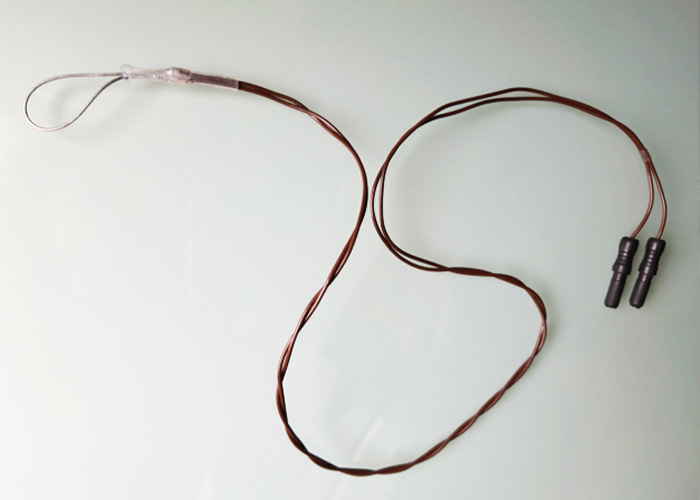
Image credit: Wikipedia

Image credit: Cheeseb29947341

Image credit: ProsectorPath
During the trial, Gottfried reportedly described PPG as “an objective physiological measure of male sexual arousal,” the “gold standard” for assessing that response, and a “strong predictor or risk factor” for recidivism.
Instead, Gehle said the test is unreliable and explained why OMH does not use it.
The jury deliberated for 22 minutes before agreeing with Gottfried about the PPG test’s ability to predict that Hyman was likely to commit another crime.
Hyman then appealed to the South Carolina Supreme Court.
South Carolina Supreme Court slams test for “lack of standardization”
Image credit: Ron Lach/Pexels (Not the actual image)
The Supreme Court unanimously ruled that PPG evidence should not be admissible in court because the testing was too unreliable to qualify as scientific evidence.
The judges pointed to several problems with PPG, including the fact that different laboratories use different testing methods, there is no standard way to conduct testing, and results can vary if the same person is tested more than once.
Chief Judge John Kittredge said the technique is “generally unacceptable in the judicial process” because of its “lack of standardization.”

Image credit: RDNE Stock Project/Pexels (Not the actual image)
“Some experts focus on the high rate of…false positives and false negatives associated with men’s ability to deliberately suppress or display arousal,” Kittredge wrote.
He added that the scientific community is “polarized” regarding the validity of the PPG as a tool for assessing sexual deviance, but noted that “even experts who believe the PPG is a valuable tool in pre-commitment evaluation admit that the test is not standardized.”

Image credit: foot2azz247

Image credit: errorvni
Referring to different results produced by initial and subsequent tests on the same person, the judge said PPG could not account for “a number of variables that influence erectile response.”
These variables include “the recency of the last time the perpetrator had sex,” “his level of intoxication or fatigue,” “his cardiovascular health,” “the medications he is currently taking,” his age, the gender of the person carrying out the test, and other variables.
The South Carolina Supreme Court joined a long list of state and federal courts that have deemed PPG testing to be unreliable scientific evidence.
The ruling does not eliminate a South Carolina law that allows the indefinite detention of certain predators after they complete their sentences. Instead, these laws limit the evidence that prosecutors can use to justify detaining someone under the law.
The case follows another Supreme Court decision on how predators should be treated in the state

Image credit: RDNE Stock Project/Pexels (Not the actual image)
In 2021, the South Carolina Supreme Court unanimously ruled that the state’s requirement that all predators remain on the sex offender registry for life was unconstitutional.
The ruling allows people who demonstrate a low risk of reoffending to petition a judge to have their names removed from the list.
The high court said the previous system, described as “the most restrictive in the nation,” violated offenders’ due process rights because it did not give them a chance to prove they were no longer a danger to society.

Image credit: freepik (Not the actual image)
The ruling, which takes effect in 2022 and mirrors systems used in other states, mandates that offenders must be tried in circuit court, where they may argue that they no longer pose a risk to their communities.
The decision sparked mixed reactions. Although critics argue that the law focuses too much on criminals and does not consider victims’ trauma, supporters say that some offenders, especially those who commit less serious crimes, should have the opportunity to prove they are no longer dangerous.
Thank You! See the results:
Number of votes ·
Bulletin
Subscribe to Access
Exclusive Poll

By entering your email and clicking Subscribe, you agree to allow us to send you personalized marketing messages about us and our advertising partners. You also agree to our Privacy Policy.
Thank You! You have successfully subscribed to the newsletter!
PakarPBN
A Private Blog Network (PBN) is a collection of websites that are controlled by a single individual or organization and used primarily to build backlinks to a “money site” in order to influence its ranking in search engines such as Google. The core idea behind a PBN is based on the importance of backlinks in Google’s ranking algorithm. Since Google views backlinks as signals of authority and trust, some website owners attempt to artificially create these signals through a controlled network of sites.
In a typical PBN setup, the owner acquires expired or aged domains that already have existing authority, backlinks, and history. These domains are rebuilt with new content and hosted separately, often using different IP addresses, hosting providers, themes, and ownership details to make them appear unrelated. Within the content published on these sites, links are strategically placed that point to the main website the owner wants to rank higher. By doing this, the owner attempts to pass link equity (also known as “link juice”) from the PBN sites to the target website.
The purpose of a PBN is to give the impression that the target website is naturally earning links from multiple independent sources. If done effectively, this can temporarily improve keyword rankings, increase organic visibility, and drive more traffic from search results.
About The Author